Before the First Storm: Is Your Strata Roof Ready?
Storm season rarely begins with a dramatic warning. More often, it begins with the first humid afternoon, the first blocked outlet, or a flashing that has been lifting quietly for months. Every year, the familiar advice returns: clear the gutters, secure loose items and review the insurance policy. That advice matters. For a body corporate, however, there is a more basic question that should come first: do we actually know the condition of the roof before the first serious storm arrives?
The Bureau of Meteorology describes October to April as Australia’s peak period for severe weather. Severe thunderstorms are most common from around September through to March or April, while the official Australian tropical cyclone season runs from 1 November to 30 April. Queensland’s own preparedness guidance also stresses that severe weather can occur outside those dates, so the sensible time to prepare is before the season, not when a warning has already been issued.
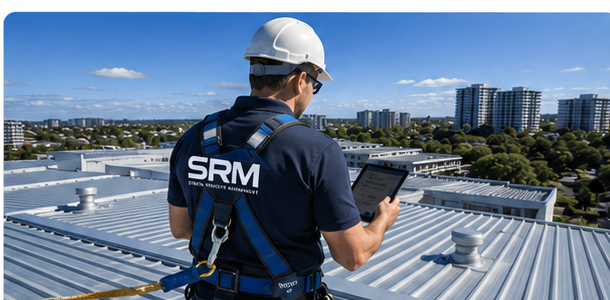
Roofs are difficult assets for committees to manage because they are largely out of sight. A garden, foyer or pool is seen every day. The roof may only attract attention after water appears inside the building. By that point, the visible leak may be the final symptom of a much older issue: blocked drainage, failed sealant, loose tiles, deteriorating membrane, corrosion, movement at flashings or a previous repair that never addressed the cause. A strata roof also involves more than the roof covering itself. Safe access, gutters and outlets, penetrations, plant, fall-prevention systems, previous defects, maintenance records and insurance documentation can all become part of the same problem.
The seven questions below help committees focus on what matters before the first major event. Each is written for the manager or committee member who needs a practical starting point rather than a technical audit.
Strata Roof Management was established to provide independent, property-focused advice. SRM provides independent, property-focused assessment and advice, with recommendations based on observed condition and documented evidence. For some properties, the right starting point is an independent roof assessment and report. Others may already have useful information and need help with a scope of works and tender process, independent oversight of planned works, or continuing monitoring. SRM can be engaged for one stage, selected stages or the complete Guardian Program.
This article provides general information only. Building conditions, maintenance requirements, insurance cover and claim decisions depend on the individual property, policy and circumstances. Committees should obtain advice appropriate to their scheme.
- Dated photographic evidence of current condition.
- A clear summary of the observed condition.
- Immediate, short-term and longer-term priorities.
- Items that need specialist investigation.
- Confirmation of outstanding recommendations from previous reports.
- A sensible next step for budgeting, tendering or monitoring.
- 01When was the roof last properly assessed? A recent invoice for gutter cleaning is not the same as a clear condition record. The committee should know what roof systems are present, what defects were observed and what was recommended.
- 02Are gutters, outlets and overflow paths clear? Stormwater systems need a clear path. Leaves, silt, vegetation and building debris can restrict drainage and turn a manageable downpour into ponding or internal water entry.
- 03Have known defects actually been closed out? Old reports and meeting minutes often contain items that were noted, discussed and then lost between committee changes. Revisit previous recommendations and confirm what was completed.
- 04Are there loose, ageing or corroded components? Tiles, flashings, sheet laps, fasteners, cappings, gutters and rooftop equipment should be reviewed for movement, corrosion or deterioration before high winds and heavy rain test them.
- 05Can contractors access the roof safely? A maintenance plan is difficult to act on if safe access has not been considered. Roof-access arrangements and fall-prevention systems should be understood before urgent work is required.
- 06Is there a dated photographic record? Good photographs help committees track change over time. They can also help distinguish recent storm damage from pre-existing deterioration, although insurance decisions always depend on the policy and the individual circumstances.
- 07Is the response plan clear? The manager, committee and relevant contractors should know who is authorised to arrange make-safe work, who records the damage and who contacts the insurer. That is easier to agree before an event than during one.
After a severe event, residents and committee members should not climb onto a roof to investigate. Make-safe work and close inspection should be undertaken by appropriately competent contractors using safe access. From ground level, record what can be seen, note the time and nature of the event, preserve relevant photographs and documents, and notify the insurer or broker promptly where damage may be covered. Temporary work should be documented so there is a clear record of what was damaged, what was made safe and what still requires investigation.
If your committee does not have a recent, clear and photographic record of the roof’s condition, the months before severe-weather season are a sensible time to establish one.
Prepare before the first major event.
SRM can help strata communities understand current roof condition, identify priorities and establish the level of support appropriate for the property. Sunshine Coast committees can also read about our independent strata roof assessments on the Sunshine Coast.
Continue reading.
Why Insurance Claims Get Denied — and What Smart Committees Do Differently
Strata Roof Safety: Why Regular Assessments Should Be Non-Negotiable
The Pros and Cons of a Roof Guardianship Program for your Body Corporate
Speak with SRM.
Independent advice tailored to your roof asset. Talk with our team about an assessment, technical report or long-term planning.